Disclosure: This article contains affiliate links. As an Amazon Associate and partner with other affiliate programs, we earn from qualifying purchases at no additional cost to you. We only recommend products we genuinely believe in. Learn more.
Best Travel Backpacks of 2026: Top Picks for Every Type of Traveler
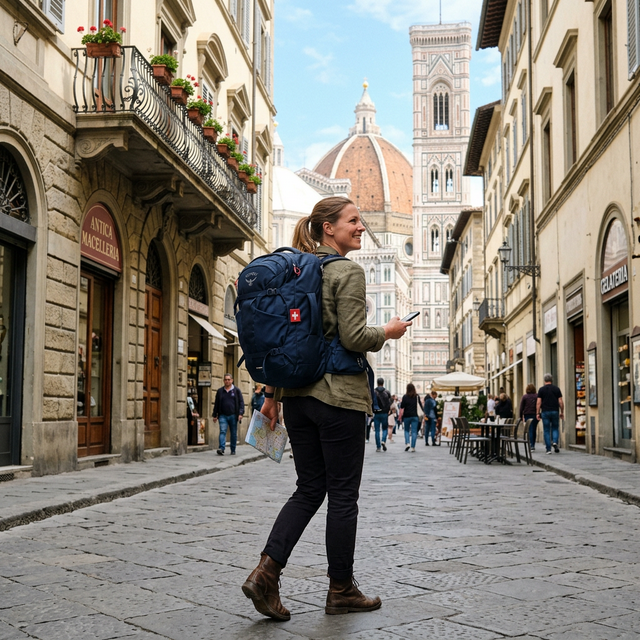
Your backpack is your home base when you travel. Choose wrong and you’ll spend a week fighting with uncomfortable straps or desperately searching for your passport buried at the bottom. Choose right and your pack disappears on your back — you barely notice it’s there.
We’ve researched and tested the top travel backpacks across every budget and travel style. Here are the best options for 2026.
Quick Picks at a Glance
| Category | Best Pick | Price |
|---|---|---|
| Best Overall | Osprey Farpoint 40 | ~$160 |
| Best Carry-On | Tortuga Setout 45L | ~$229 |
| Best Budget | REI Co-op Ruckpack 40 | ~$99 |
| Best Ultralight | Gossamer Gear Gorilla 40 | ~$265 |
| Best for Women | Osprey Fairview 40 | ~$160 |
| Best Daypack | Osprey Daylite Plus | ~$70 |
| Best Adventure | Gregory Baltoro 65 | ~$290 |
Our Top Travel Backpack Picks
1. Osprey Farpoint 40 — Best Overall Travel Backpack
Best for: Carry-on travel, 1–3 week trips, general travel
Capacity: 40 liters
Weight: 1.58 kg (3.48 lbs)
The Osprey Farpoint 40 is the benchmark that all other travel backpacks are measured against — and it consistently delivers. It fits in most airline overhead compartments (though check dimensions with budget carriers), offers a clamshell opening for easy packing, has a lockable zipper, and comes with a built-in sleeping bag compartment that doubles as a daypack.
What we love:
- Harness system zips away neatly when not needed (great for airport conveyor belts)
- Internal frame distributes weight well even fully loaded
- Multiple organizational pockets
- Osprey’s “All Mighty Guarantee” — they’ll repair or replace it forever
The trade-off: It’s not the most stylish pack — definitely has an outdoorsy look that some travelers prefer not to wear in cities.
2. Tortuga Setout 45L — Best Carry-On Backpack
Best for: Carry-on only travel, business trips, urban travel
Capacity: 45 liters
Weight: 1.6 kg (3.6 lbs)
Tortuga’s Setout is designed by people who actually travel for a living, and it shows. Every decision is optimized for airport travel: passes the carry-on sizing test on most airlines, opens completely flat like a suitcase for easy packing, has a padded laptop compartment up to 17”, and the exterior is low-key enough to not scream “backpacker.”
What we love:
- Clamshell opening with mesh panel divider
- Dedicated laptop slot accessible from the back
- Hip belt and chest strap pack away cleanly
- Tons of organizational pockets including a front admin panel
The trade-off: Pricey. But if you’re a serious carry-on-only traveler, this is the pack.
3. REI Co-op Ruckpack 40 — Best Budget Travel Backpack
Best for: Budget travelers, first-time backpackers, weekend trips
Capacity: 40 liters
Weight: 1.3 kg (2.9 lbs)
At around $99 (REI members get a discount), the Ruckpack 40 punches well above its weight class. It has an internal frame, a padded laptop sleeve, and a zip-away harness system similar to premium packs. The materials aren’t quite as durable as Osprey or Tortuga, but for occasional travelers, it’s an excellent value.
What we love:
- Great laptop organization
- REI’s return policy is among the best in retail
- Fits as a carry-on on most airlines
- Comfortable carry for its price point
The trade-off: Slightly less durable materials and fewer water-resistant features than premium picks.
4. Osprey Fairview 40 — Best Travel Backpack for Women
Best for: Female travelers, carry-on trips, 1–3 week travel
Capacity: 40 liters
Weight: 1.47 kg (3.24 lbs)
The Fairview 40 is essentially the Farpoint’s sister pack, redesigned with a women-specific harness that better fits narrower shoulders and shorter torsos. The difference in comfort is significant — this is not just a “pink it and shrink it” version; the ergonomics are genuinely different.
What we love:
- Women-specific LightWire suspension system
- Padded hip belt offers real load transfer
- Same great clamshell design as the Farpoint
- Comes with detachable daypack
The trade-off: Same style concerns as the Farpoint — it’s functional, not fashionable.
5. Nomatic Travel Bag 20L — Best for Business Travel
Best for: Business travelers, weekend trips, minimalist packers
Capacity: 20 liters (personal item size)
Weight: 0.87 kg (1.9 lbs)
If you travel for work and want something that works as both a laptop bag and an overnight bag, the Nomatic Travel Bag is exceptional. The organization is brilliant — dedicated spots for tech cables, water bottle, sunglasses, passport, and a hidden shoe compartment. It slides easily over a suitcase handle.
What we love:
- Obsessive organization with 14+ pockets
- Weatherproof YKK zippers
- Personal item-friendly (fits under the seat in front)
- Works equally well as a daypack at your destination
The trade-off: Expensive for 20 liters. Not right for anyone who needs significant clothing capacity.
6. Osprey Daylite Plus — Best Daypack
Best for: Day trips, as a supplementary pack, city exploration
Capacity: 20 liters
Weight: 0.46 kg (1 lb)
The Daylite Plus collapses small when not needed but expands to carry a day’s worth of gear, a 13” laptop, water bottle, and snacks. Lightweight, comfortable, and nearly indestructible. Pairs beautifully with the Farpoint 40 as its included daypack.
What we love:
- Incredibly light
- Attaches to the Osprey MagLite system (for use with larger Osprey packs)
- Built-in sternum strap and load lifter straps
- Excellent value at ~$70
How to Choose a Travel Backpack
1. Figure Out Your Capacity Needs
- 20–30 liters: Personal item / business travel / day trips
- 35–45 liters: Carry-on travel, 1–3 week trips (sweet spot for most travelers)
- 50–65 liters: Longer backpacking, outdoor adventures, 3+ week trips
- 65+ liters: Extended adventure travel, trekking
2. Carry-On vs. Checked
Airlines vary in their carry-on rules. Most allow bags up to approximately 45 x 35 x 20 cm (though measurement enforcement is inconsistent). Budget carriers (Ryanair, Spirit) are strictest — always check before you fly.
A 40–45L bag fits most airline carry-on allowances. Larger packs often need to be checked.
3. Organization Style: Panel Load vs. Top Load
- Panel loaders (clamshell opening) let you see everything at once — great for urban travel and airports
- Top loaders are more compressible and better for hiking/adventure travel where you’re packing and unpacking less frequently
4. Hip Belt vs. No Hip Belt
For trips under 10 days with moderate loads (12 kg / 26 lbs or less), a hip belt may not be necessary. For heavier loads or longer carry times, a padded hip belt is essential — it transfers weight from your shoulders to your hips.
5. Consider the Harness Position
Many travel packs have zip-away harnesses — when you check the bag or go through airport security, the straps disappear into a back panel, preventing them from getting caught in baggage systems.
What We Look For When We Test Travel Backpacks
- Fit and comfort fully loaded
- Organization quality (does it make packing and finding things efficient?)
- Carry-on compatibility (does it realistically fit in an overhead bin?)
- Durability of zippers, stitching, and fabric
- Water resistance
- Access points (can you get to what you need without unpacking everything?)
- Value relative to price
FAQ
Q: What’s the ideal backpack size for carry-on only travel?
A: 40–45 liters is the sweet spot — large enough for 10–14 days of clothing if you pack light, while fitting in most airline overhead bins. Perfect for the one-bag travel lifestyle.
Q: Can I bring a travel backpack on Ryanair?
A: Ryanair allows a personal item (40 x 20 x 25 cm) for free, but a full carry-on requires paying for a cabin bag allowance. Check current Ryanair baggage rules before booking — they update periodically.
Q: How do I prevent my backpack from getting damaged at the airport?
A: Use a backpack rain cover or a purpose-built luggage cover. For very valuable packs, wrap in a large garbage bag before checking. Zip-away harness systems also protect straps from baggage conveyor belts.
Q: Is an external frame or internal frame better for travel?
A: Internal frame. External frames are for serious hiking with heavy loads — they’re impractical for airport travel and don’t belong in overhead bins.