Disclosure: This article contains affiliate links. As an Amazon Associate and partner with other affiliate programs, we earn from qualifying purchases at no additional cost to you. We only recommend products we genuinely believe in. Learn more.
Travel Packing Cubes Review 2026: Are They Actually Worth It?
Packing cubes are one of those travel products that inspire strong opinions. Some travelers swear by them and refuse to pack without a full set. Others think they’re overpriced zip pouches that solve a problem nobody has.
Owner threads on r/onebag and r/travel, plus manufacturer specs, point to the same answer: packing cubes are worth it, but not for the reasons most brands advertise.
For product-specific recommendations, check our detailed Best Packing Cubes comparison. This review focuses on whether the concept works and how to get the most from your cubes.
What Packing Cubes Actually Do (and Don’t Do)
Let’s kill the biggest myth first: regular packing cubes don’t save space. Your clothes occupy the same volume whether they’re inside a cube or loose in your bag. Physics doesn’t change because you added a nylon pouch.
What packing cubes do accomplish:
Organization that stays organized. Without cubes, a neatly packed bag turns into a disaster after the first time you dig for socks. With cubes, each category stays contained. You pull out the cube you need, grab what you want, and put it back. The rest of the bag stays untouched.
Faster packing and unpacking. At a hotel, you can pull cubes out of your bag and into dresser drawers in 30 seconds. Repacking is equally fast. On a multi-stop trip where you’re packing and unpacking every few days, this adds up.
Compression (with the right cubes). Compression packing cubes with dual-zipper systems do reduce volume, typically 20-40% on bulky items. This matters for carry-on-only travelers who are fighting for every inch of space in a 40L backpack.
Separation of clean and dirty. Many travelers use one cube for dirty laundry. Simple, but it works better than a plastic bag because the mesh panels allow airflow and reduce odor buildup.
Three cube sets travelers actually compare
The sets below show up again and again in carry-on threads. Specs and owner reports, not a private six-trip lab:
Trip Set 1: Eagle Creek Pack-It Isolate Compression Cubes ($50)
Typical use in reviews: 10–14 day carry-on trips and winter layers in a 40L pack.
The Eagle Creek compression cubes match the brand’s dual-zipper claim: winter layers (fleece, light puffer) compress enough to fit a 40L pack that would otherwise be overstuffed.
Owner reviews consistently call out the ripstop nylon and zippers that don’t catch. Mesh panels let you see contents without opening the cube, which saves time when you’re hunting for a specific shirt.
Where they fell short: the compression doesn’t help much with already-compact items. A cube full of rolled t-shirts compresses maybe 10%. You notice the difference on bulky items, not thin ones.
Trip Set 2: Gonex Compression Cubes ($22)
Typical use in reviews: backpacking and short city trips where price matters more than zipper feel.
At less than half the price of Eagle Creek, the Gonex cubes are the budget set onebag threads usually recommend. Compression and organization are there; durability comments are more mixed.
The differences from Eagle Creek in those reviews: zippers occasionally catch on fabric, the nylon feels thinner, and the compression panel loosens after a few compress-decompress cycles. None of these are dealbreakers at $22, but the quality gap is real.
Trip Set 3: Osprey Ultralight Regular Cubes ($30)
Typical use in reviews: warm-weather carry-on trips and hikers who want the lightest cube set.
The Osprey Ultralight cubes weigh almost nothing (85 grams for a three-piece set). For weight-conscious travelers, this is the appeal. No compression, no fancy features, just featherweight organization.
They make the most sense for light summer clothing — rolled t-shirts, shorts, and swimwear stay organized without adding weight. For bulky layers, owner threads switch back to compression cubes.
The translucent fabric is genuinely helpful. You can see what’s inside each cube without opening it. The thin material is the tradeoff: several reviews mention a buckle or zipper pull poking a hole on hiking trips.
Compression Cubes vs. Regular Cubes: The Verdict
After comparing specs and owner reports for both types, here’s the honest split:
Get compression cubes if:
- You travel carry-on only and push the limits of your bag
- You pack cold-weather layers (sweaters, fleeces, jackets)
- You’re a chronic overpacker trying to reform
- You use a travel backpack under 45L
Regular cubes are fine if:
- You pack light, warm-weather clothing
- You check a bag and have plenty of space
- You care about organization, not volume savings
- You want to spend the minimum and see if cubes work for you
For most travelers, I’d recommend starting with a set of regular cubes (Osprey Ultralight or Amazon Basics) to see if you like the organizational system. If you do, upgrade to compression cubes (Eagle Creek or Gonex) when you replace them.
A cube system that stays consistent
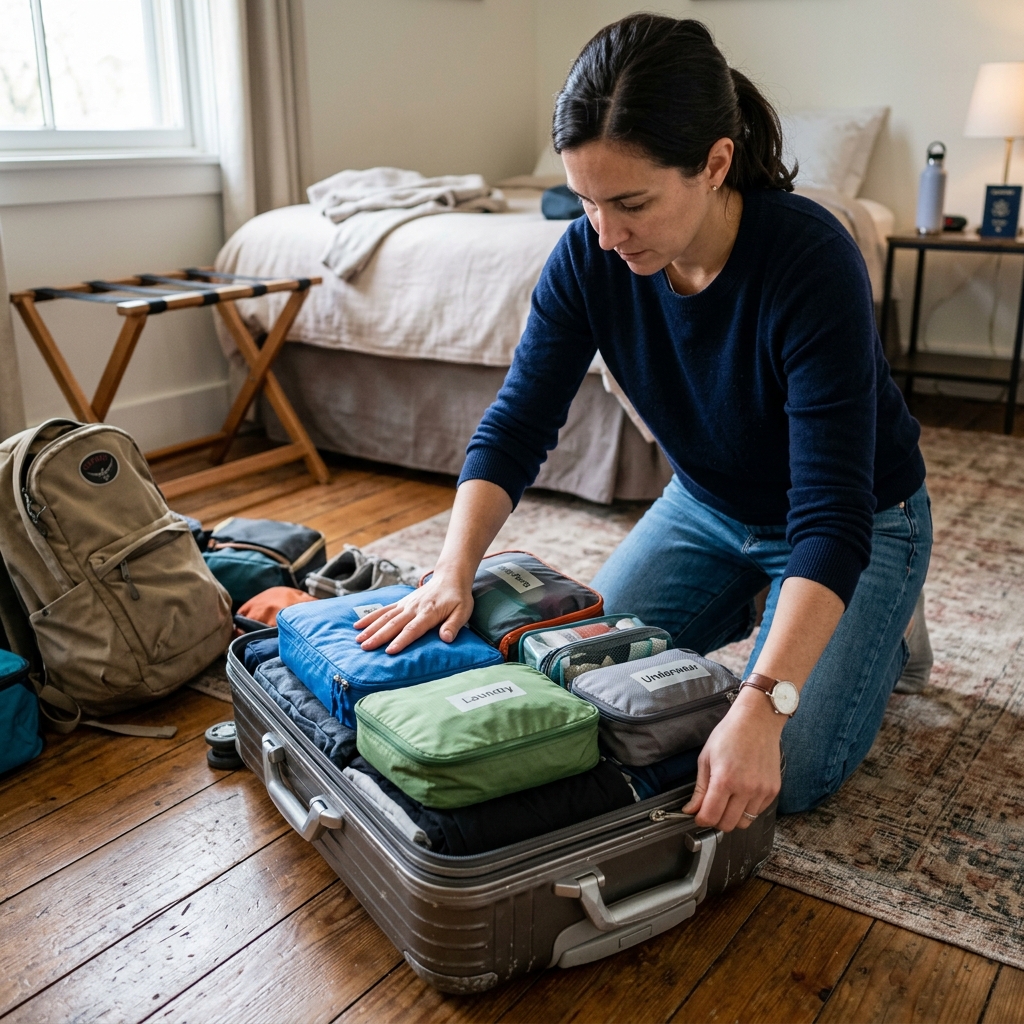
The three-cube layout below is the one that shows up most often in carry-on packing threads:
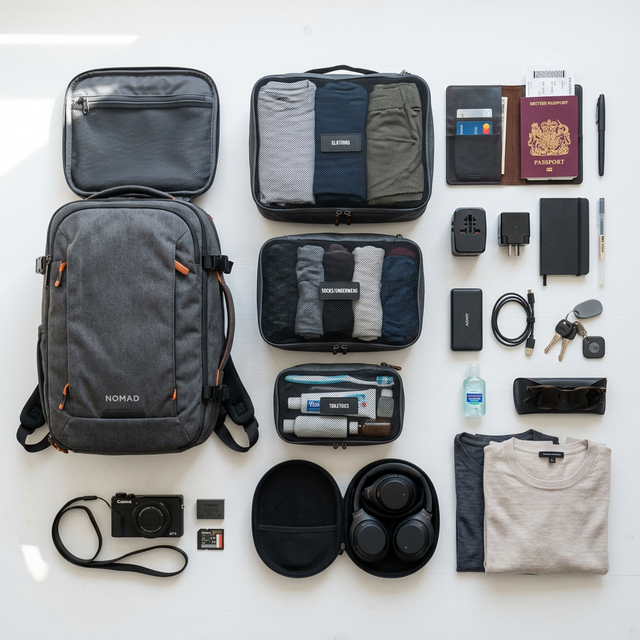
The three-cube system: One medium cube for tops, one medium for bottoms, one small for underwear, socks, and base layers. This covers 7-10 days of clothing for warm-weather travel and 5-7 days for cold weather.
Rolling vs. folding by fabric: Roll jersey knits (t-shirts, casual shirts, leggings). Fold woven fabrics (dress shirts, chinos, linen pants). Rolling knits prevents wrinkles and packs tighter. Folding wovens preserves creases and structure.
Fill cubes completely. A half-empty packing cube is a waste. The cube should be full (not bursting) before you compress it. Under-filled cubes shift around in your bag and lose their organizational advantage.
Heaviest cubes at the bottom. In a backpack, place the heaviest compressed cube closest to your back and at the bottom. This keeps the center of gravity close to your body and improves carrying comfort. Our packing light guide covers weight distribution in more detail.
One cube for dirty laundry. Start the small cube with clean underwear, then flip it to dirty laundry as the trip progresses. By the end it holds only dirty clothes, and the medium cubes have absorbed the remaining clean items.
Common Packing Cube Mistakes
Too many cubes. A 6-piece or 8-piece set sounds comprehensive, but managing six cubes in a 40L pack is actually harder than managing three. More cubes means more wasted space from the cube fabric itself and more digging to find the right cube.
Color-coding obsession. Some travelers buy cubes in different colors and assign categories to each color. This works for about one trip before you forget the system. Labels or mesh visibility panels work better.
Buying cubes that don’t fit your bag. Packing cube dimensions need to match your luggage. Large cubes designed for checked suitcases won’t fit neatly in a 40L backpack. Measure the interior of your bag before buying cubes.
Compression cubes on already-compact clothes. Compressing rolled t-shirts and thin underwear accomplishes almost nothing. Save compression for bulky items and let compact clothing sit in regular cubes.
The Budget Question: How Much Should You Spend?
Packing cubes range from $15 for a basic Amazon set to $150 for a full Peak Design setup. Here’s where the value sits:
Under $20 (Amazon Basics, Veken): Fine for occasional travelers. They’ll organize your bag effectively for 1-2 years. Replace them when zippers start failing.
$20-30 (Gonex, Osprey Ultralight): The value sweet spot. Gonex for compression, Osprey for ultralight. These last 2-3 years of regular travel.
$30-50 (Eagle Creek, Cotopaxi): The performance sweet spot. Eagle Creek compression cubes are the best-reviewed cubes across every travel forum and subreddit. They last 5+ years.
$50+ per cube (Peak Design): Premium quality for travelers who want the absolute best. Only worth it if you already own Peak Design bags and want the ecosystem integration.
My recommendation for most travelers: Eagle Creek Pack-It Isolate compression cubes at ~$50 for the set. They hit the intersection of durability, compression performance, and price that makes replacing them unnecessary for years.
Final Take
Packing cubes won’t transform you from a chaotic packer into a minimalist overnight. But they do make the mechanical parts of travel, finding things, packing and unpacking, keeping clean and dirty clothes separate, noticeably smoother. That smoothness compounds over a multi-week trip or across a year of frequent travel.
If you’re skeptical, spend $20 on a budget set and try them for one trip. Most people who try cubes keep using cubes. The converts outnumber the skeptics by a wide margin.
For the complete product comparison with specs, pricing, and detailed reviews, head to our Best Packing Cubes roundup. And check our ultimate packing list for what to put inside those cubes.

Editorial Team
The Best Travel Guides editorial crew writes every guide on this site under a team byline. Recommendations come from comparing product specs side by side, digging through traveler communities like r/onebag, r/travel, and r/WaltDisneyWorld, and weighing large volumes of verified user reviews. When we cite prices or policies, we link to the official source.
Join the Conversation