Disclosure: This article contains affiliate links. As an Amazon Associate and partner with other affiliate programs, we earn from qualifying purchases at no additional cost to you. We only recommend products we genuinely believe in. Learn more.
Travel Safety Tips for First-Time International Travelers
The unique job of first-trip safety is not a gadget aisle. It is the first hour after you clear immigration: which ATM, which ride, which SIM kiosk — before you are tired enough to say yes to the unofficial helper at the curb.
This desk does not patrol streets and does not invent crime percentages. The notes below come from travel.state.gov, STEP, CDC Travelers’ Health, CISA public-Wi-Fi cards, and the scam patterns on how to avoid travel scams abroad. Country conditions move. Open the page for the place on your ticket.
The sequence that gets you to this hour is travel tips for beginners. The bag is carry-on only. Insurance is the buyer’s guide.
Unique angle: first-hour threat model vs “be aware”
Listicles flatten “stay alert.” The first hour has three specific jobs.
ATM. A bank-branded machine inside the terminal or a staffed branch beats a standalone lobby machine someone walked you to. Cover the PIN. Take the card. Do not count a stack of bills at the curb. Airport FX booths are a convenience product, not a safety product.
Ride. A ride-hail pickup zone you already mapped, an official airport desk, or a pre-booked hotel car beats a person with a laminated sign you did not request. The “broken meter” and “special price” patterns are on the scams page.
SIM / data. A storefront you chose, or an eSIM you installed on Wi-Fi before boarding, beats a folding table in the arrivals hall you cannot name later. Without a working map, the first two jobs get harder.
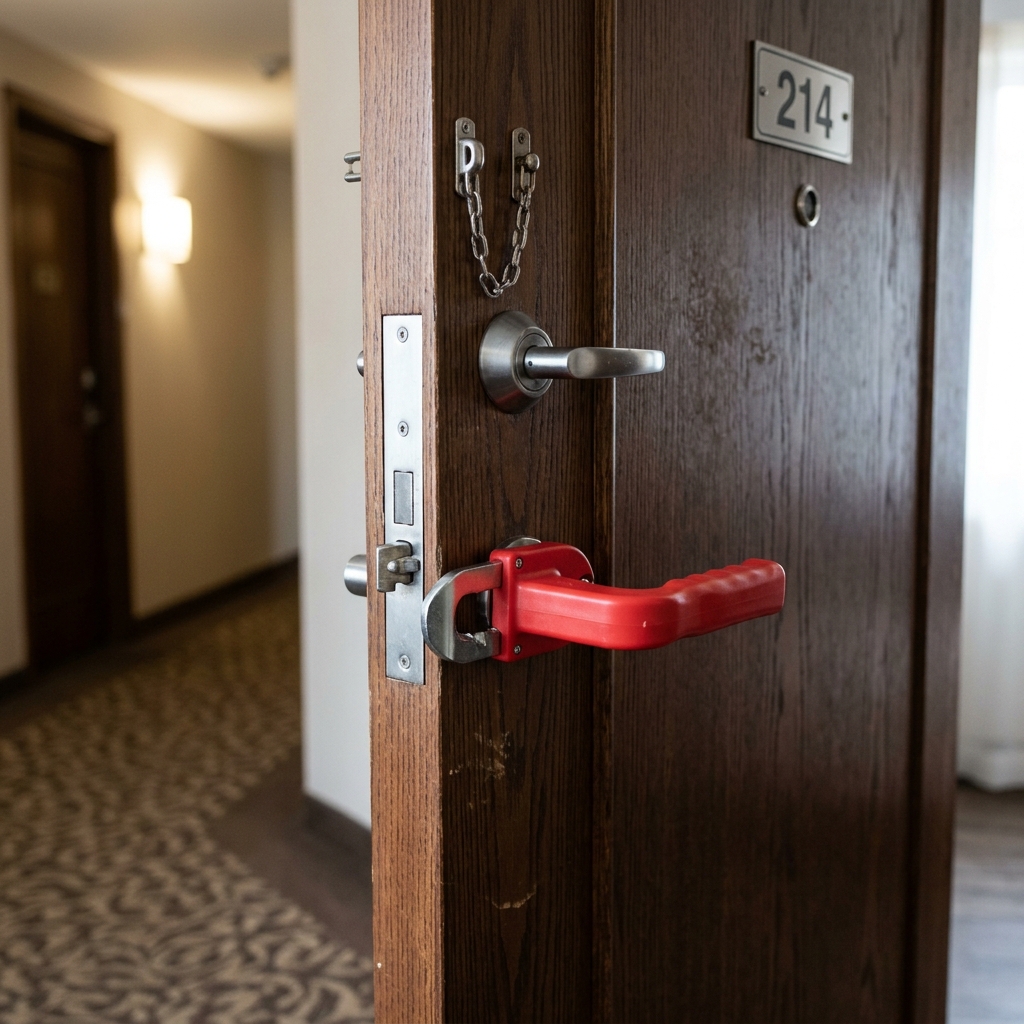
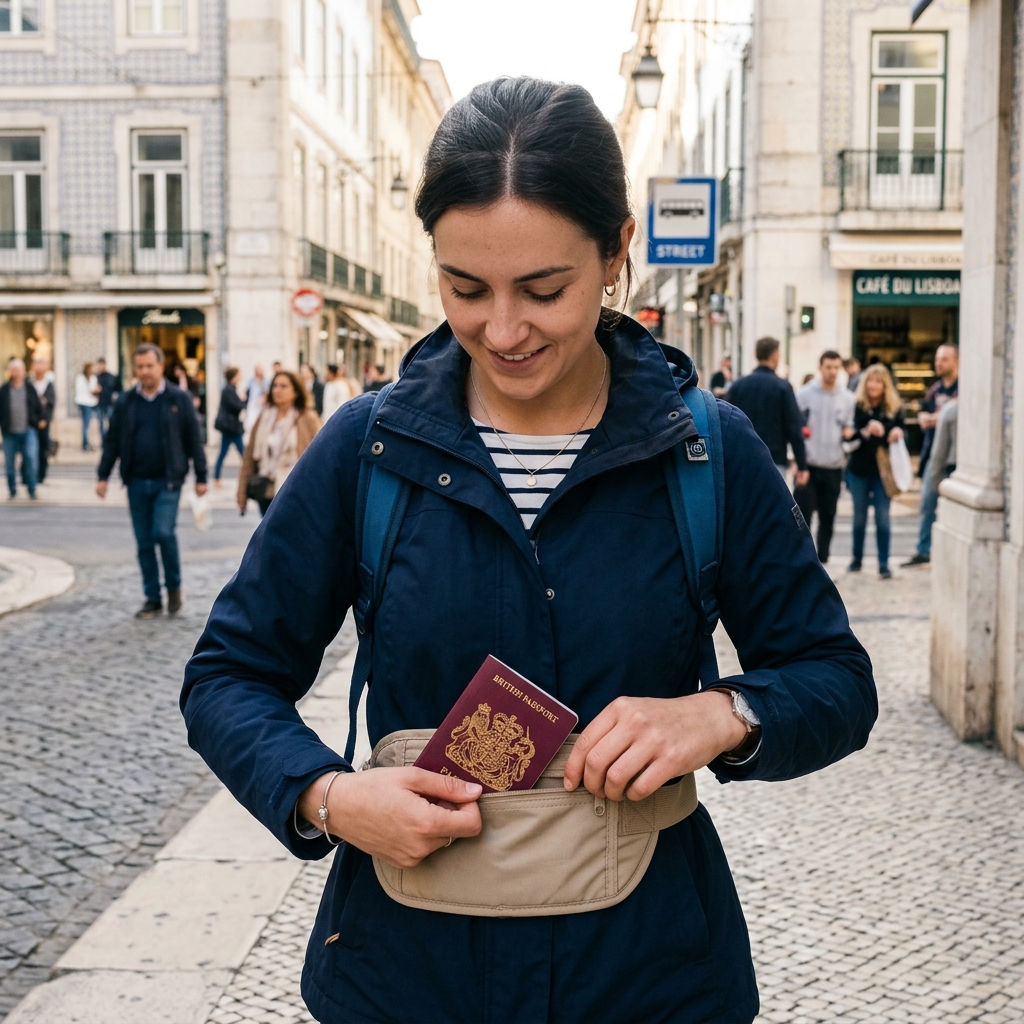
When to skip a money belt, an RFID wallet, or a portable door lock: you will not wear the belt; the destination is card-first and you already split two cards; the room has a working safe and you will use it; the gadget is how you avoid reading the State page. Skip is a use-it-or-leave-it decision. A belt you stuff in the backpack is just a second wallet.
Listing check: State advisory level for the country, embassy phone, local emergency number, STEP enrollment, and whether the first ride is already priced.
Before you leave
- Enroll in STEP. It is free. It sends embassy alerts and gives them a way to reach you or your emergency contact.
- Read the State travel advisory and the country information page for the destination and any transit country.
- Save the nearest embassy or consulate phone and address offline.
- Photo of the passport biodata page in Files, plus one paper copy that does not live in the same pocket as the book.
- Insurance PDF offline. State tells Americans to buy travel health cover. Evacuation is a policy line, not a slogan. Insurance guide.
- Bank travel notice. A second card from a second network, split from the first.
- CDC Travelers’ Health for vaccines and destination health. A clinic 4–6 weeks out beats a pharmacy scramble.
- Offline maps and the local emergency number. 911 is not universal. 112 is the EU number. Destination pages list the rest.
Hubs: blog index, flights hub, packing-list generator.
Money: split, then stop adding gadgets
Two cards, different networks. Daily cash in the pocket you will actually watch. Backup cash and the second card in the room safe or a different bag.
A no-foreign-fee card is a fee product. Credit cards is the snapshot. It is not armor.
Bank ATM, inside a space with a door, during hours you chose. Decline conversion-to-dollars prompts.
A money belt earns a place if you will wear it under clothes for a cash-heavy day. It does not earn a place as a $30 talisman. Hidden-pocket jackets are a clothing product — that comparison — not a substitute for the first-hour plan.
Streets: purpose, then the map
Walk like you have a block in mind. Open the map inside a shop or a café, not on a corner with the phone at chest height.
Every tourist city has a short list of repeat scams. Five minutes on the destination plus the 20-scam guide is enough to recognize the friendship-bracelet, the petition, the “help” at the ticket machine, and the unofficial taxi.
Night: lit streets you already walked in daylight, or a ride-hail you opened yourself. Ask the desk which blocks they would not walk — that is local, not a ranking.
Alcohol is how first-hour judgment dies at hour twelve. Watch the drink being poured. You do not owe a stranger a second round.
This is not legal advice and it is not a personal-security course. If a situation feels wrong, leave. Politeness is not a contract.
Health: official pages, not a kit flex
CDC Travelers’ Health is the vaccination and destination page. Some countries want yellow-fever proof. That is an entry document, not a packing-cube extra.
Pack the prescriptions you already take, in original packaging, plus the over-the-counter meds you already tolerate. Formulations abroad differ. This desk is not your clinician.
Bottled water and ice are destination-specific. Ask the desk. CDC destination pages flag water risk when they have it.
A working phone number in-country is how you call local emergency services. eSIM is the plan page.
Digital: hotel Wi-Fi is a different job
CISA public-Wi-Fi cards still say: confirm the network name with staff, prefer cellular for banking, use a VPN when you must stay on the hotspot. VPNs for travel is that product. Install it at home.
2FA on email and banking before you fly. A phone backup before you fly.
Public USB posts are a skip: use your own brick in a wall, or a power bank that already follows FAA spare-battery rules. Portable chargers is the comparison.
If something breaks
Local emergency number, saved offline. Embassy number, saved offline. Insurance 24/7 line, saved offline.
Lost book: embassy or consulate, lost or stolen passport steps, copies ready.
A paper card in the wallet with your name, emergency contact, insurance number, and allergies is useful if you cannot unlock a phone. Blood type only if you already know it and a clinician told you it matters for your file — this desk is not writing medical records.
Tell someone at home the city and the hotel name. A missed check-in should have a next step (hotel phone, then embassy), not a panic spiral.
The longer safety list is how to stay safe while traveling abroad. Apps are travel safety apps. This page is the first hour and the night-before file.
What official pages actually do
A State advisory level is a government product. It is not a “safe / not safe” trophy this desk invented. Level 1–4 language lives on that page and it can change after you book. Read it again the week you fly.
Crisis response explains what an embassy can and cannot do in a disaster. STEP is how they email you. A private “evacuation membership” banner is a different product. If you want medical evacuation, that is a line on a travel-insurance certificate — the insurance guide — not a social-media ad.
Hotel-room basics that do not need a shopping list: use the latch, use the safe if it works, do not prop the door for a delivery you did not request, and put the passport copies in a different place than the book. A portable door lock is optional hardware. A working latch is the room you booked.
When to skip the first-timer safety stack
- You already enrolled in STEP, you have the embassy file, and you have done this airport.
- You opened this page to buy an RFID wallet. Read the State page instead.
- The trip is a cruise-port afternoon with a ship-arranged ride and you already have a working phone.
- You need destination-specific crime context. That is the State country page, not a generic 20-tip list.
Desk checklist the night before
- STEP on
- State advisory read this week
- Embassy phone offline
- Passport copies split
- Insurance PDF offline
- Two cards split
- First ride priced
- Data plan that works at the curb
- Local emergency number saved
Safety abroad is awareness plus a file. It is not paranoia and it is not a shopping list. Conditions vary and they change. Check the official pages again if the trip is months out.
This page is informational. It is not legal or medical advice. See about for how this desk works.
FAQ
Biggest first-trip risk?
Petty theft and repeat tourist scams show up in traveler reports more than headline violence in most city destinations. Read the State page for your country.
Carry the passport?
If the country requires ID, yes, secured. If not, a split copy is the usual plan.
Insurance?
State says buy health cover. Price a policy. Skip a blog’s invented bill.
Money?
Two cards, split cash, bank ATM you chose.
Lost passport?
Embassy, official lost-stolen page, copies ready.
Related reading
- First Time International Travel — passport clock before the first hour
- How to Avoid Travel Scams Abroad — payment vs distraction
- How to Stay Safe While Traveling Abroad — the longer list
- How to Pack Light: Carry-On Only — bag that stays with you
- How to Pack Light for a Two-Week Trip · Ultimate Packing List
- Travel Insurance · Best eSIM · Best VPNs
- Flights hub · All guides
Editorial Team
The Best Travel Guides editorial crew writes every guide on this site under a team byline. Recommendations come from comparing product specs side by side, digging through traveler communities like r/onebag, r/travel, and r/WaltDisneyWorld, and weighing large volumes of verified user reviews. When we cite prices or policies, we link to the official source.

Join the Conversation