Disclosure: This article contains affiliate links. As an Amazon Associate and partner with other affiliate programs, we earn from qualifying purchases at no additional cost to you. We only recommend products we genuinely believe in. Learn more.
How to Pack Light for a Two-Week Trip: A Practical System
The unique job of a two-week pack is not “be a minimalist.” It is whether you will wash around day 7 — sink, machine, or hotel bag — or whether you are actually packing 14 wear-days and calling it a system.
This desk does not live out of a 40L for a month and does not invent a “15–20 outfit” scoreboard. The notes below come from r/onebag and r/HerOneBag laundry threads, hotel and hostel wash reports, and the same carrier boxes on how to pack light carry-on only. Climate changes the math more than a cube brand.
The subtract-by-trip checklist is the ultimate packing list. First-trip sequence is travel tips for beginners.
Unique angle: laundry-day vs extra shirts, by climate
Listicles flatten “pack for a week, travel forever.” That slogan fails in three different weathers.
Tropical or humid city, sink access. A merino or synthetic tee can go back on the line after a sink wash and be wearable the next morning. This is the climate where the 5-top capsule is honest. Cotton is still damp at checkout.
Temperate city, a mapped machine. One mid-trip wash is a two-hour errand, not a lifestyle. Google the laundromat before you leave the apartment for the day. Hotel laundry is a posted price. Ask before you hand over a bag in a business hotel — per-item lists are how a “quick wash” becomes a second dinner.
Cold or wet, slow dry. A wool sweater and jeans do not dry overnight on a radiator you are not allowed to use. You either pack a second warm layer you can rotate, buy dryer time, or you skip the 7-day capsule and take the hold bag. Winter is when “pack for a week” is a forum slogan, not a plan.
When to skip the 7-day capsule: no sink, no machine, and no hotel bag you will actually pay for; a formal week with shirts that must be pressed; wet cold with one pair of boots that cannot dry; you refuse to rewear. Skip is a laundry-access decision.
Listing check: destination humidity, whether the stay has a sink that holds water, whether a machine is a walk you will do, and the ticketed airline box (that last one is the carry-on-only page).
Before you pack
- Write the laundry method you will actually use on day 6 or 7. “I’ll figure it out” is 14 shirts.
- If the method is a sink: confirm the fabric dries overnight in that climate. Humid concrete bathrooms fail cotton.
- If the method is a machine: drop a pin on a laundromat near the mid-trip stay, not the first hotel.
- If the method is hotel laundry: ask for the price list in writing. Per-item business hotels are a different product than a hostel bag.
- Count wear-days of tops (5–7), not calendar days (14).
- Count shoes at two. The third pair is the hold bag.
- Open the carry-on-only box for the ticketed carrier before you congratulate yourself.
Hubs: the packing-list generator, the blog index, and the flights hub.
The 14-day math without a fake scoreboard
You do not need 14 unique outfits. You need enough clean next-to-skin pieces to reach the wash, plus layers that can be reworn because they do not sit on skin all day.
A research starting template — adjust for dress code and weather, do not treat it as a trophy kit:
| Category | Starting count | Why it is not 14 |
|---|---|---|
| Tops | 5 | Rewear + one wash |
| Bottoms | 2–3 | They take space; they do not need a daily swap |
| Underwear / socks | 7 | The one category worth a full week |
| Outer layer | 1 | Worn in transit; not a second coat “just in case” |
| Shoes | 2 (one on your feet) | The third pair is how capsules die |
The mix-and-match rule is practical, not cute: if a piece does not work with at least two other pieces in the bag, it is a costume for a night you have not booked.
Fabric is the dry-time product
Merino and synthetics. r/onebag threads keep repeating these because they dry and they smell less after a second wear. That is a fabric job, not a brand trophy. Uniqlo merino, Icebreaker, Smartwool, and house-brand synthetics all show up. Pick the shirt you will actually wash in a sink.
Linen in heat. Breathable. Wrinkled. Fine for a casual city. Bad if the itinerary is a pressed dinner every night.
Cotton and heavy denim. They hold water. They take the line overnight and lose. One dark pair of daily pants can be the exception. A stack of cotton tees is how people invent a “two-week packing problem.”
Winter knits. One lightweight merino or fleece layer beats a single heavyweight sweater that fills a cube. A second warm piece is insurance when nothing dries. That is extra volume. See “when to skip.”
Three laundry methods that are real
Mapped laundromat
Exists in most cities travelers actually go. Cost and hours are local — look them up, do not use a blog’s “$5–10” as a quote. Time is a wash plus a dry, not a five-minute errand. Take a book or do the grocery run next door. The failure mode is arriving Sunday night when the place is closed.
Hotel or hostel bag
Convenient. Price is the whole question. A hostel or a guesthouse bag can be cheap. A business hotel per-shirt list can cost more than buying a replacement tee downstairs. Ask first.
Sink wash
Needs: a sink that holds water (a universal plug is the unglamorous tool), detergent sheets or a small bottle that already fits TSA 3-1-1, and a line or a shower rod. Wring through a towel. Hang. Quick-dry fabric is ready by morning in a dry room. Cotton in a sealed bathroom is still wet.
Sea to Summit Clothesline on Amazon
That link is the existing listing this page already used. Confirm the current seller and length. A cheap hotel hanger line also works. The clothesline is optional; the dry time is not.
Toiletries for two weeks, not a bathroom drawer
Two weeks of full-size bottles is how a capsule fails the sizer. Decant into travel bottles that already meet TSA’s 3.4 oz / 100 ml rule, switch to solids, or use what the hotel puts in the shower.
Sunscreen in a sunny destination is often cheaper and larger on the ground. Medications you cannot replace stay in the cabin bag with the label on.
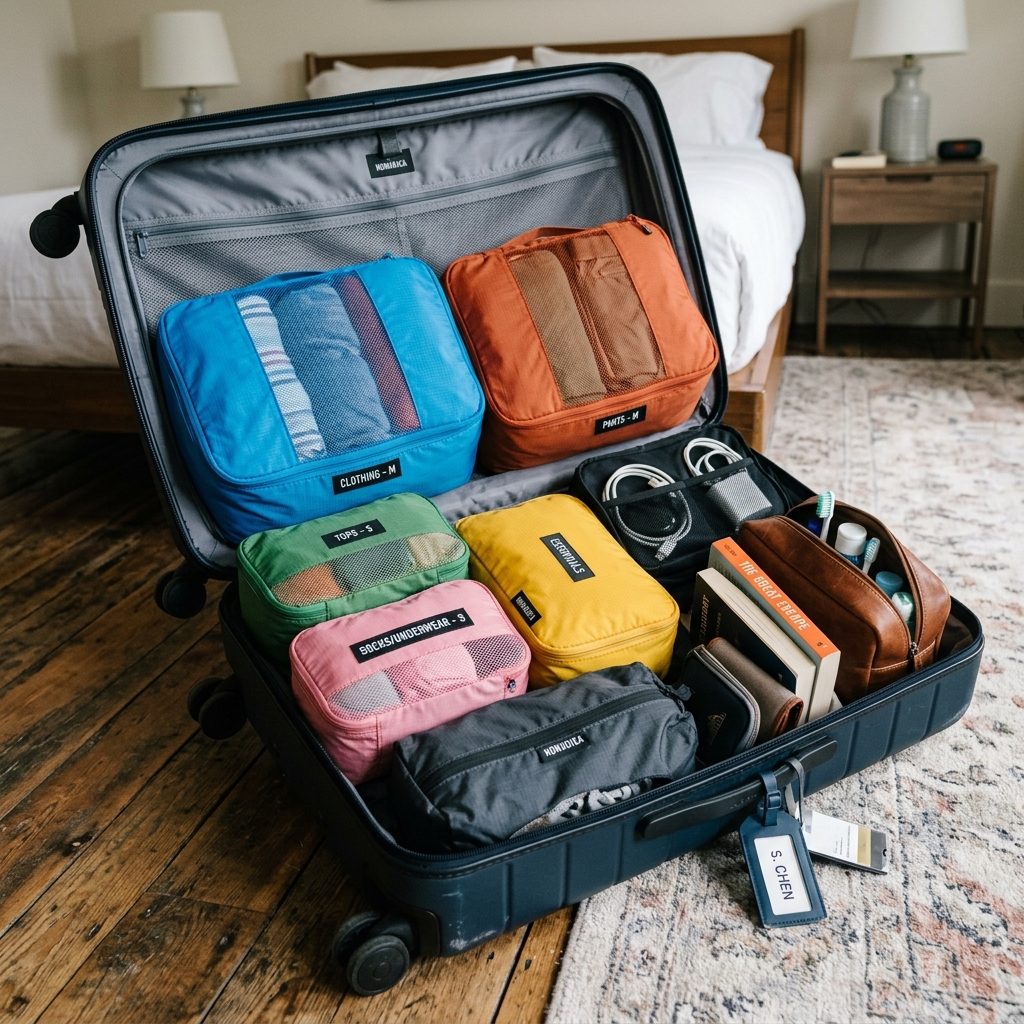
For the pouch, see travel toiletry bags. For cubes that separate clean and dirty, see packing cubes.
When to skip the 7-day capsule
- No laundry method you will actually use. Then pack the wear-days or check a bag.
- Formal week: pressed shirts, a blazer rotation, dress shoes. Buy the hold add-on.
- Wet cold, one pair of boots, no dryer. A soaked boot is not a “rewear.”
- You hate rewearing and you will not wash. That is a preference. Honor it with a bigger bag instead of a guilty carry-on.
- The ticket is a 10 kg Priority cap and the laundry kit (detergent, line, spare shoes) blows the scale. The carry-on-only page wins.
Desk checklist at day 6
- Laundry method still true for the current stay, not the first hotel
- Dirty cube or bag actually exists so clean clothes stay clean
- Tomorrow’s outfit does not depend on a sweater that is still dripping
- Detergent sheets still legal in the cabin if you fly again mid-trip
- You have not “just added” a souvenir hoodie on top of the original 5 tops without subtracting
If the closet at home is already fighting you, start from the ultimate list and subtract. First-hour after landing is safety for first-timers.
The first trip’s order of operations — passport clock before the closet — is travel tips for beginners. Do not buy a non-refundable fare and then discover the book needs expedite. That clock is not a packing problem, but it is why this page comes last.
FAQ
Two weeks in a carry-on?
Yes if you wash and the box fits. No if you are packing 14 shirts and hoping.
How many outfits?
5–7 wear-days of mixable pieces, plus a real laundry plan.
What to leave?
Third shoes, slow-dry cotton, hypothetical formalwear.
Laundry options?
Machine, hotel bag, or sink. Climate decides which one is honest.
Same clothes every day?
Neutrals plus one accent. A formal week is a different system.
Related reading
- How to Pack Light: Carry-On Only — the published box and weight cap
- Ultimate Packing List for International Travel — subtract by trip type
- First Time International Travel — do not pack before the passport clock
- Travel Safety Tips for First-Time International Travelers — first hour after immigration
- Best Packing Cubes — clean vs dirty, not magic volume
- Packing-list generator · Flights hub · All guides
Packing notes on this page come from carrier baggage pages, TSA liquids rules, and community laundry threads — not a private two-week test closet. See about for the editorial process.

Editorial Team
The Best Travel Guides editorial crew writes every guide on this site under a team byline. Recommendations come from comparing product specs side by side, digging through traveler communities like r/onebag, r/travel, and r/WaltDisneyWorld, and weighing large volumes of verified user reviews. When we cite prices or policies, we link to the official source.
Join the Conversation