Disclosure: This article contains affiliate links. As an Amazon Associate and partner with other affiliate programs, we earn from qualifying purchases at no additional cost to you. We only recommend products we genuinely believe in. Learn more.
How to Avoid Travel Scams Abroad: 20 Common Scams and How to Beat Them
The unique job of a scam page is not a 20-country diary. It is payment versus distraction — especially in the first hour after you clear immigration — and whether a money belt or an RFID wallet is how you avoid reading the State Department page for the place on the ticket.
This desk does not invent crime percentages, “billions lost,” or a 90-percent-defense line. The notes below come from travel.state.gov country and crime pages (official taxi queues, indoor ATMs, unsolicited drivers), CISA public-Wi-Fi cards, STEP, and the patterns travelers repeat on r/travel. Conditions move. Open the advisory the week you fly.
The first-hour file is also travel safety tips for first-timers. The longer habit list is travel safety tips. Gadgets that do not replace this file: travel gadgets. A bag you wear in front: gear for women and travel backpacks. Tired judgment after a crossing is jet lag.
Unique angle: payment vs distraction (first hour)
Listicles flatten “be aware.” The useful split is two jobs.
Payment. Unofficial taxi at the curb. ATM you did not choose. Dynamic currency conversion. A second swipe you did not watch. A QR sticker over the real one. State’s crime page tells you to book airport transport in advance, use official ranks or tracked ride-hail, and treat unsolicited drivers as a skip. Indoor, bank-branded ATMs beat a machine someone walked you to.
Distraction. Bracelet, petition, spill, “let me take your photo,” fake cop, friendship walk to a shop. The payment happens while your hands are busy. Hands in pockets, keep walking, do not sign.
Digital. A network named “Airport_Free_WiFi” you did not confirm with staff. CISA says confirm the network name, skip banking on public Wi-Fi, prefer cellular. Install a VPN at home. Install an eSIM before boarding so you are not shopping SIMs at a folding table.
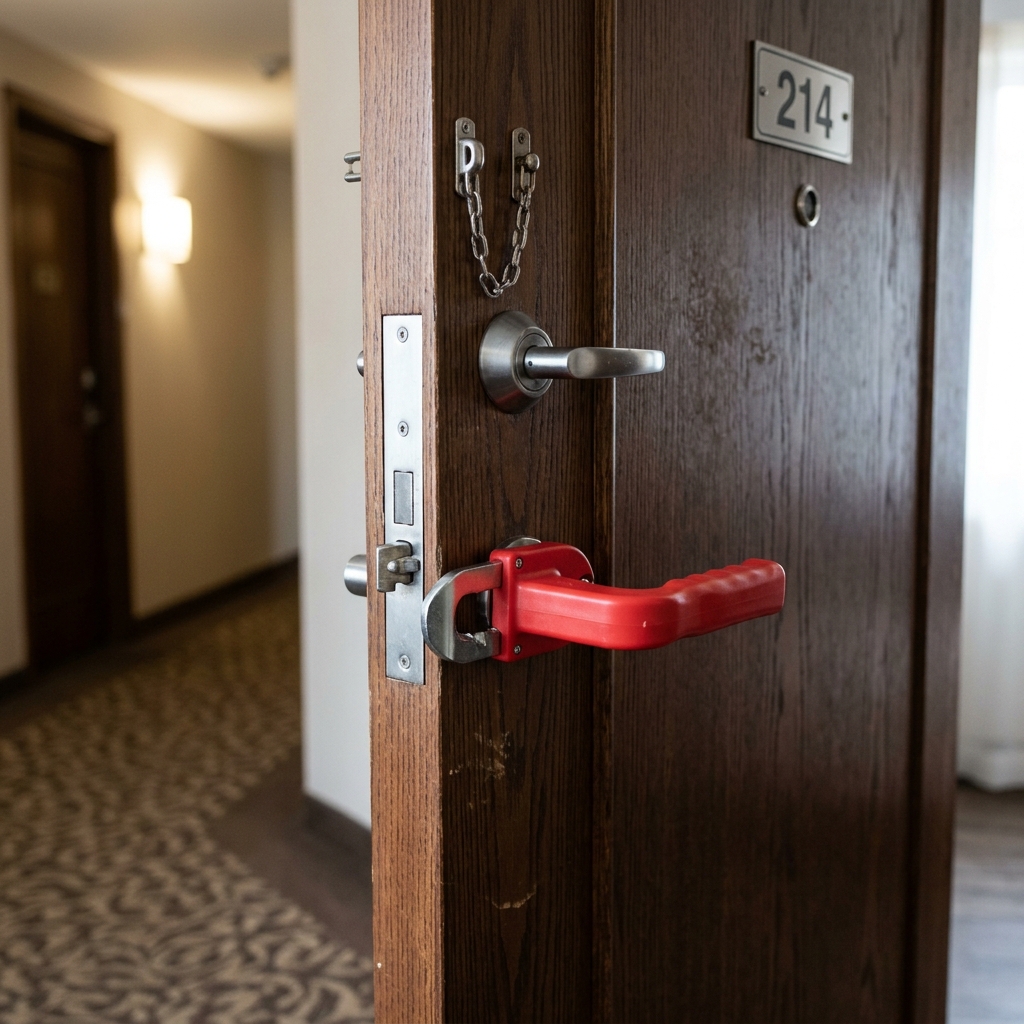
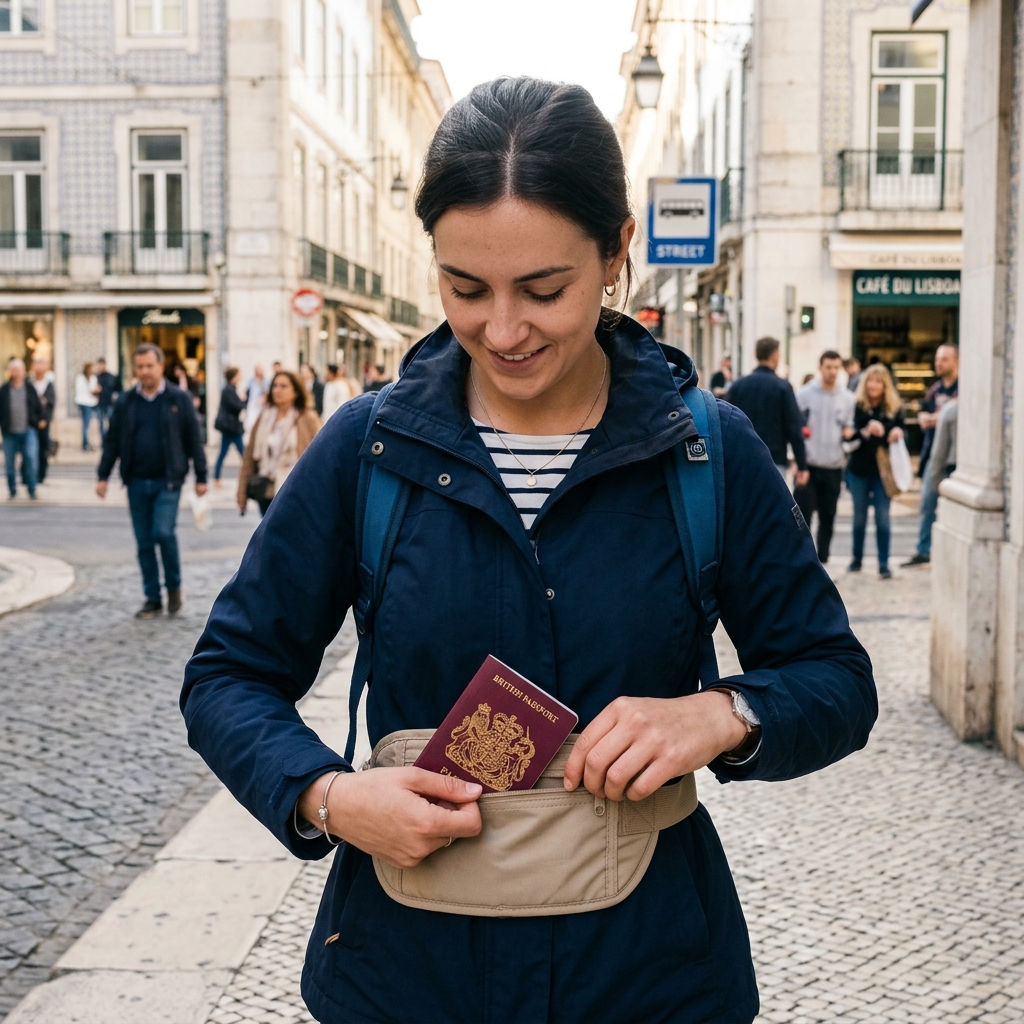
When to skip a money belt, RFID wallet, or portable lock: you will not wear the belt; the destination is tap-to-pay and two cards are already split; the room latch and safe work; the gadget is how you skip the State page. A belt in the backpack is a second wallet. Hardware notes stay on gadgets.
Listing check: State advisory level and country information page for this ticket, embassy phone, local emergency number, STEP enrollment, and whether the first ride is already priced.
Before you land
- Read the travel advisory and the country page, including transit.
- Enroll in STEP. Free. Alerts plus a way to reach you.
- Save the embassy or consulate phone offline.
- Two cards, different networks, split. Bank travel notice.
- First ride: official rank, hotel desk, or a ride-hail pin you already mapped — not a laminated sign in arrivals.
- Data that works at the curb. eSIM or a home-plan PDF.
- CISA habit: confirm Wi-Fi names with staff; cellular for banking.
Hubs: blog index, flights, packing-list generator.
Money and payment (1–4)
1. The taxi meter trick
Driver says the meter is broken, or the meter has been hurried. State’s crime card: official queue or kiosk, not a person who walks up. Ride-hail with a matching plate. Ask the desk what the ride should cost before you are at the curb. If the meter “does not work,” get out.
2. Currency confusion
Large-denomination lookalikes (Vietnam, Indonesia, and other high-zero currencies). Learn the bills before you land. Count change. ATM cash from a bank machine you chose beats a street “good rate.”
3. The closed exchange rate
Booth shows one number, pays another. Airport counters are a convenience product. A bank ATM’s network rate plus a known fee is usually the cleaner math — this desk does not invent a 3–8% trophy. Confirm the rate and the fee before you hand notes over. Count in front of the clerk.
4. The extra swipe
Card leaves your sight; a second reader exists. Watch the terminal. Tap when you can. Issuer alerts on. A no-foreign-fee card is a fee product — travel credit cards — not armor. Decline conversion-to-dollars prompts.
Street and attraction (5–8)
5. Friendship bracelet / free gift
Tied on, then a demand — or a pocket emptied while you smile. Hands away. “No” and walk. Do not debate.
6. The petition
Clipboard, vague cause, donation, or an accomplice. Do not stop in the tourist funnel. It is almost never a real petition in that funnel.
7. The photo offer
Phone taken, or a costumed pose with an aggressive bill. Ask another tourist, or skip the gladiator. Do not hand the only phone to a stranger.
8. Fake tickets
Outside the museum, “skip the line.” Buy on the official site or the box office. Ignore the approach.
Transport (9–11)
9. Airport taxi hustle
Unofficial drivers in arrivals. State: book ahead with a company you can name, or the official rank. Match the ride-hail car to the app. The first-timer page is the same hour: safety for first-timers.
10. The scenic route
Follow the route on a map you opened. Ride-hail prices the job in advance. A polite “this looks longer” is enough; getting out in a staffed place is allowed.
11. Flat tire / helpful stranger
Unsolicited help at a rest stop while an accomplice works the other door. Drive to a lit, staffed lot if you can. Lock, valuables out of sight. Rental-car pages from the country desk often flag this pattern — read that page, not a blog’s country list.
Rooms and menus (12–14)
12. Bait-and-switch room
Booked room “unavailable,” then an upsell. Confirmation on the phone. Reputable platform or the hotel site. Call the property a day out. The platform’s support is the document if they walk the booking.
13. Menu without prices
Two menus, or none. Eat where prices are printed. Walk a few blocks from the monument. Reviews are a filter, not a guarantee.
14. Surprise service line
Coperto in Italy is often a listed cover, not a secret. A 25% “service” that never appeared is a line to question before you pay. Read the bill. Ask before you order if the menu is silent.
Social engineering (15–18)
15. The commission friend
Excellent English, sudden warmth, one specific bar or carpet shop. Decline the escort. Choose the door yourself. State’s pages describe unsolicited “help” and unofficial guides in more than one region — the pattern is the lesson, not a country roast.
16. Spill and snatch
Sauce, coffee, bird mess. Step away. Clean in a shop. Do not form a huddle with the person who spilled.
17. Fake police
Badge, wallet, planted cash, a bribe. Real officers can walk to a station. You can ask for ID and write the number. Do not hand the wallet. Country pages describe impersonation in some places — treat it as a possible pattern, not a statistic.
18. Short change
Count before you leave the stall. Small bills. Learn the coins.
Digital (19–20)
19. Fake hotspot
Name looks official. CISA traveling tip card: confirm the network and the login with staff. Do not bank on café Wi-Fi. Cellular or a VPN you already installed. VPNs for travel.
20. QR swap
A sticker over the real code. Preview the URL. Pay the waiter or the official site. Growing in traveler reports since restaurants leaned on QR menus — still a look at the sticker habit, not a new crime wave this desk invented.
Universal rules that are not a gadget aisle
- Urgency is the tell. Slow the decision.
- Politeness is not a contract. A short “no” is cheaper than a second swipe.
- Search “[destination] tourist scams” plus the State country page — local flavor sits there, not in a 20-item global dump.
- Split cash and cards. Two networks. Daily cash only in the pocket you watch.
- Credit for purchases (chargeback path) vs debit (money already gone). Issuer rules win.
- Official taxi rank, indoor ATM, confirmed Wi-Fi. That is most of the first hour.
This is not legal advice and it is not a personal-security course. If a situation feels wrong, leave. Most people you meet are not running a petition. The ones who are, practice.
When to skip this stack
- You already ran this airport, STEP is on, and the first ride is priced.
- You opened this page to buy an RFID sleeve. Read the State page first.
- The trip is a cruise-port afternoon with a ship-arranged bus.
- You need destination crime context. That is the country advisory, not a generic 20.
Desk checklist the night before
- State advisory read this week
- STEP on
- Embassy phone offline
- First ride named (rank, hotel, or app)
- Two cards split; DCC decline planned
- eSIM or home data live; VPN installed
- No new money-belt purchase unless you will wear it
A scam is a payment you did not mean to make, or a pocket you stopped watching. It is not a personality test. See about for how this desk works.
FAQ
Most common?
Unofficial taxis, ATM/card tricks, distraction theft, fake tickets — in traveler reports and on many State city notes. Not a global ranking.
Which countries?
Wherever tourists and cash meet. Open your advisory.
If it happens?
Notes, police paper if you can, issuer, embassy if the book or a crime is involved. Then the rest of the trip.
Do I need a money belt?
Only if you will wear it. Otherwise it is a second wallet.
Related reading
- Travel Safety Tips for First-Time International Travelers — first hour after landing
- How to Stay Safe While Traveling Abroad — the longer habit list
- Best Travel Safety Apps
- Best Travel Gadgets — jobs, not a talisman aisle
- Best Travel Gear for Women — bag you wear in front
- Best Travel Backpacks
- How to Avoid Jet Lag — tired judgment is how hour one fails
- Best VPNs for Travel · Best eSIM
- Travel Insurance
- Flights hub · Packing-list generator · All guides

Editorial Team
The Best Travel Guides editorial crew writes every guide on this site under a team byline. Recommendations come from comparing product specs side by side, digging through traveler communities like r/onebag, r/travel, and r/WaltDisneyWorld, and weighing large volumes of verified user reviews. When we cite prices or policies, we link to the official source.

Join the Conversation