Disclosure: This article contains affiliate links. As an Amazon Associate and partner with other affiliate programs, we earn from qualifying purchases at no additional cost to you. We only recommend products we genuinely believe in. Learn more.
First Time International Travel: Complete Beginner’s Guide for 2026
The unique job of a first international trip is not a vibe. It is order of operations: the passport clock, then the destination’s entry PDF, then a fare you can still change, then insurance, then the bag. Packing first is how people buy a ticket they cannot board.
This desk does not sit on your kitchen table and does not invent a booking-week trophy. The notes below come from travel.state.gov, processing times, destination country pages, and the sibling keepers already on this site. Those government pages move. Check them the morning you pay.
Passport detail is how to get a passport fast. Europe entry authorization is ETIAS and it is not live yet. Fares are how to find cheap flights. The bag is carry-on only. First-hour safety is safety for first-timers.
Unique angle: the sequence, and when to skip the first-trip stack
Listicles flatten “10 tips for your first trip.” The order is the product.
1. Passport clock. Get Your Passport Fast is the fork: routine if you have more than six weeks plus mail; expedite (+$60) if you are inside six weeks; regional-agency appointment if you are inside the urgent window they publish (14 calendar days, with proof of travel). Mail can add up to two weeks each way. A “I leave in five weeks” trip is not automatically safe on routine.
2. Entry PDF. Visa-free, e-visa, visa on arrival, or a consulate. The State country information page plus the destination’s own immigration site. Passport validity — including the six-month rule where they publish it — lives there, not in a forum.
3. Fare. Google Flights tools, not a fake “book on a Tuesday in month four” rule. See cheap flights and when to book.
4. Insurance. State tells you to buy travel health cover. Cards are a Guide-to-Benefits PDF, not a feeling. Travel insurance.
5. Pack. Airline box, then the list. Carry-on only and the packing list.
When to skip this first-trip stack: you already hold a valid book with the right validity; you have entered this country before and the rules have not changed on the State page; you are adding a domestic weekend to a trip you already run every year. Skip the essay. Open the page you actually need.
Listing check: processing-times printout, destination entry line, ticket change rules, insurance certificate, carrier cabin box.
Before you spend
- Open current passport processing times. Write the number. It is not this article.
- Count backward from the first international departure, including a visa interview if you need one.
- Open the destination’s State page for entry and validity.
- If Europe is the plan, read ETIAS so you do not pay a helper site. The official portal is not collecting applications yet.
- Do not buy a non-refundable fare before the book exists unless you accept the risk.
- Price insurance after the ticket exists. Waiver clocks are in the policy, not in a blog.
- Pack last.
Hubs: blog index, flights hub, packing-list generator.
Step 1: the passport, with official clocks
First book: DS-11, unsigned, in person, at an acceptance facility listed on iafdb.travel.state.gov. You need certified citizenship evidence, ID, a photo that meets the photo rules, and two payments.
Fees this desk checked on the 2026 fees page: $130 book, $35 execution at the facility, $60 expedite add-on if you choose it. Confirm the printed dollars the day you go. The full fork is on how to get a passport fast.
Do not use a private “expediter” until you have tried the government appointment system. The Department says third-party appointment fees are a scam signal.
Step 2: entry requirements (the PDF, not a vibe)
U.S. passports are visa-free in a lot of places and not in others. The categories are boring and they matter:
- Visa-free: still check validity and the landing card.
- e-visa / ETA: apply on the government’s domain. Weeks, not the airport wifi.
- Visa on arrival: some countries want cash in a specific currency. Read their page.
- Consulate visa: China and others are a paperwork week (or more) before the fare.
Always read: the State country page, the destination’s own immigration site, and any transit country’s rules if you change planes.
ETIAS is a future authorization for the Schengen-side list they publish. Ireland is not on that 30-country list. Paid “helper” sites are the scam. The official portal is not taking applications yet.
Step 3: book the fare without a fake window
There is no honest universal “2–6 months” sweet spot and no desk-invented layover savings. Use Google Flights date grids and price tracking for your airports. How to find cheap flights keeps the method. Cheapest time to book is travel-month flexibility, not a day-72 rule.
Practical checks that are not rankings:
- The operating carrier’s baggage box (the packing pages).
- Change and cancel rules before you click.
- Nearby airports only if the transfer is a trip you will actually do.
- Budget airlines if the add-on stack still beats a mainline fare.
DOT refund rules live on the cheap-flights page. Do not take a blog’s “always mid-week” as a quote.
Step 4: a bed you can still cancel
First trip: a staffed front desk is a logistics product, not a luxury ranking. Hostels and rentals work if you read recent reviews and you know how you will arrive after dark.
Book a rate you can cancel until the passport and the entry PDF are real. Stay near the transport you will use on night one. Street-view the walk from the station.
Step 5: money without invented markups
A no-foreign-transaction-fee card is the usual first-trip fix. Issuer pages change. Travel credit cards is the snapshot. A debit card that refunds ATM fees is a cash product; confirm the current terms on the bank’s site.
Use a bank ATM for local cash. Airport exchange booths are a convenience tax — this desk does not invent an 8–15% number for your Tuesday. Decline dynamic currency conversion when a terminal offers to charge you in dollars.
Daily “budget” tables on blogs are not quotes. If you want ranges, use the travel budget calculator and treat the samples as illustrations.
Notify the bank that you will be abroad, or use the issuer’s travel notice. A frozen card at midnight is a first-trip classic.
Step 6: pack last
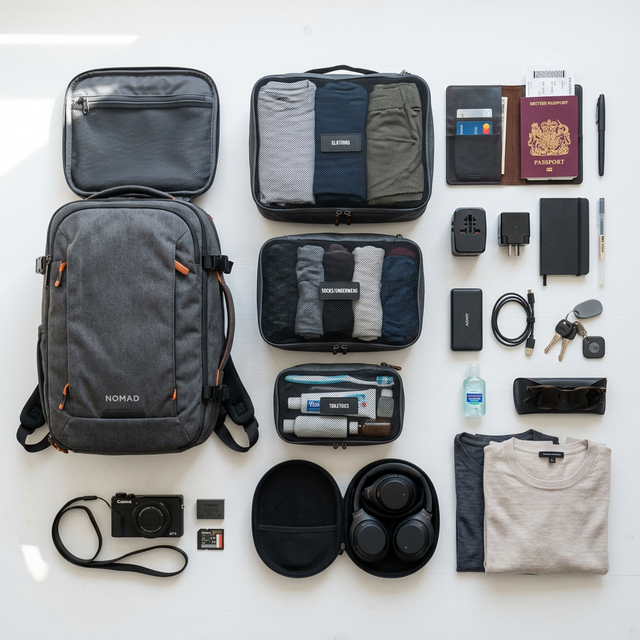
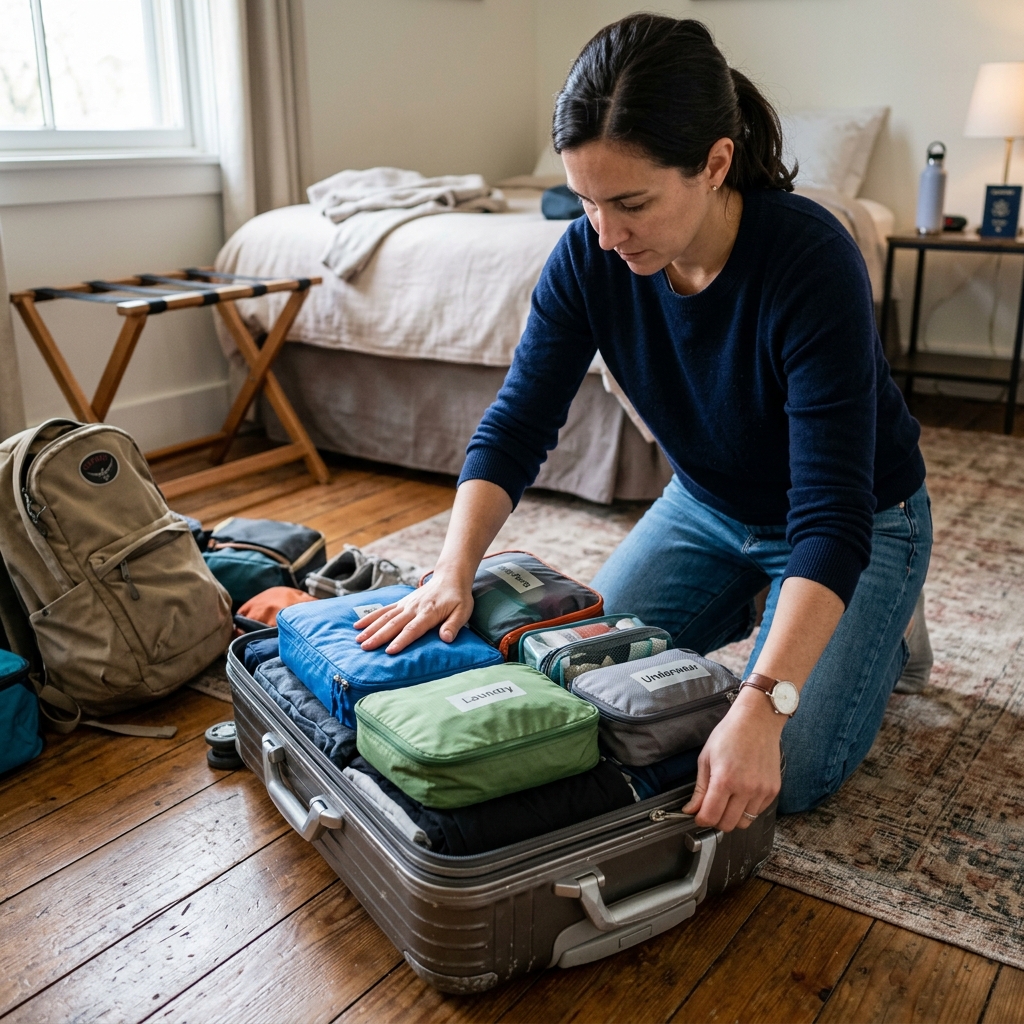
The bag is a sizer. Carry-on only is the published box. Two weeks is laundry. The list is subtract-by-trip. The generator prints a checklist after you know climate.
A 40L pack is not magic. Ryanair’s free bag is not a 40L pack.
Step 7: the airport and the flight
Online check-in when it opens. Screenshot the boarding pass. International arrival time is the carrier’s number, not “two hours like domestic.”
TSA 3-1-1 still applies outbound from the U.S. Laptop and liquids rules follow the checkpoint you are in.
On a long-haul: water, move when you can, set the phone to destination time if that helps you. Cabin humidity and DVT risk are medical topics — this desk is not your clinician. If you have a condition, ask that clinician before you fly.
Step 8: the first hour on the ground
Immigration, then bags if you checked, then customs. Have the accommodation address written where you can show it without unlocking a dead phone.
Transport you already priced beats a taxi queue you have not researched. Data is a plan: eSIM vs a home-carrier pass vs a kiosk SIM. Download maps on Wi-Fi before you leave the airport if the line is still off.
The threat model for that hour is safety for first-timers: ATM, unofficial taxi, and a SIM kiosk you did not choose.
When to skip the first-trip stack
- Valid book, known destination, you have done this routing.
- You only needed the passport-fast page or the eSIM page.
- Someone else already holds the tickets and the insurance certificate; you just need the bag.
- You are planning a domestic trip and opened this URL by search. Close it.
Desk checklist the week before
- Book still valid for the destination’s published rule
- Entry paperwork done on an official domain
- Insurance PDF offline
- Bank notice set
- Offline maps and a translation pack downloaded
- Accommodation address on paper
- Carrier box vs the bag you packed
- STEP enrolled if you want embassy alerts
Common first-trip holes this desk keeps seeing in traveler threads: overpacked days, no insurance, a frozen card, airport FX as the plan, no offline translate, and a phone that dies before the train ticket loads. None of those need a diary. They need the sequence above.
The first morning can be slow. That is not a failure of the plan.
FAQ
How early for a passport?
State processing times plus mail. The passport-fast page is the clock.
When to book flights?
Your route’s price graph. No universal week-number.
Insurance?
State says buy health cover. Read the certificate.
Related reading
- How to Get a Passport Fast — routine vs expedite vs agency
- Travel Safety Tips for First-Time International Travelers — first hour after immigration
- How to Pack Light: Carry-On Only — the published box
- How to Pack Light for a Two-Week Trip — laundry-day math
- Ultimate Packing List — subtract by trip type
- How to Find Cheap Flights · Travel Insurance
- Flights hub · All guides

Editorial Team
The Best Travel Guides editorial crew writes every guide on this site under a team byline. Recommendations come from comparing product specs side by side, digging through traveler communities like r/onebag, r/travel, and r/WaltDisneyWorld, and weighing large volumes of verified user reviews. When we cite prices or policies, we link to the official source.

Join the Conversation